Infant Massage: The Complete Guide to Bonding, Better Sleep, and Relieving Your Baby's Discomfort
August 22, 2025
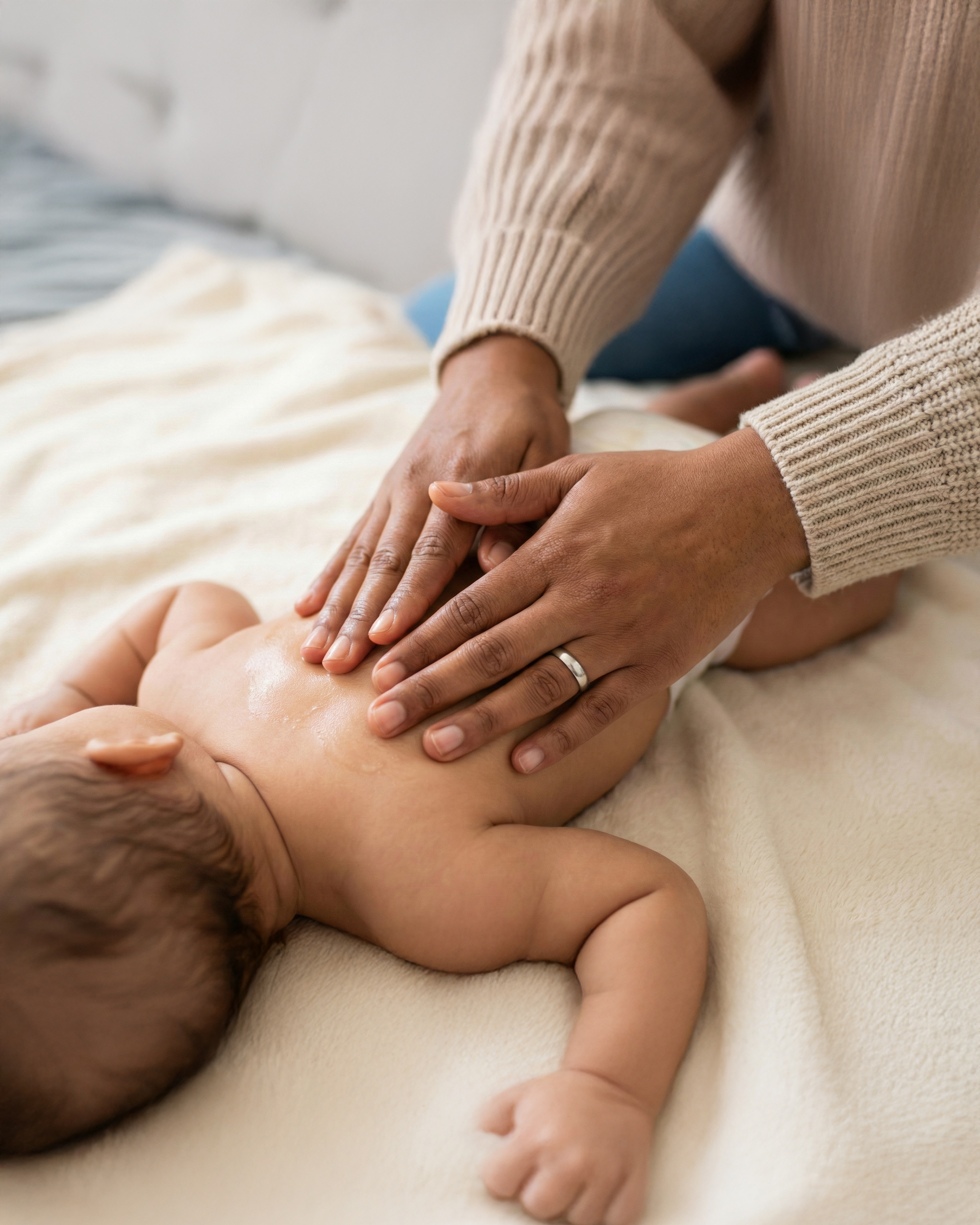
Your baby is fussy. Again. You've fed, burped, changed, and rocked. Nothing seems to help. Their little body is tense, their fists are clenched, and you're both exhausted.
What if I told you that your hands hold one of the most powerful soothing tools available?
Infant massage has been practiced for thousands of years in cultures around the world. It's not just a nice bonding activity (though it absolutely is). It's a therapeutic practice with real, measurable benefits for your baby's digestion, sleep, development, and emotional wellbeing.
And you don't need to be a trained therapist to do it. You just need willing hands and a few minutes.
Why Touch Matters So Much
Touch is your baby's first language. Long before they understand words, they understand pressure, warmth, and the safety of your hands.
Touch is also the first sense to develop in the womb. By 8 weeks gestation, your baby could feel sensation. By the time they're born, touch is their most developed way of experiencing the world.
Positive touch communicates: "You are safe. You are loved. You belong."
Research shows that babies who receive positive touch have:
- Lower cortisol (stress hormone) levels
- Better weight gain
- Improved immune function
- Enhanced brain development
- Stronger attachment to caregivers
The Proven Benefits of Infant Massage
1. Relief from Gas, Colic, and Constipation
Your baby's digestive system is brand new and still learning how to work. Gas gets trapped. Things don't move as smoothly as they should. The result? A miserable, screaming baby.
Specific massage strokes can help move gas through the intestines, stimulate bowel movements, and relieve the abdominal discomfort that causes so much crying.
The "I Love You" Technique for Gas Relief
- With baby on their back, trace an "I" down the left side of their belly (your right)
- Trace an upside-down "L" across the top and down the left side
- Trace an upside-down "U" up the right side, across the top, and down the left
- This follows the path of the large intestine and helps move gas along
2. Better Sleep
Massage stimulates the production of melatonin (the sleep hormone) and serotonin (which converts to melatonin). Studies show that babies who receive regular massage sleep longer and more deeply.
A gentle massage as part of the bedtime routine signals to your baby's body: "It's time to wind down."
3. Reduced Crying and Fussiness
One study found that babies who received massage cried 48% less than those who didn't. Massage helps regulate their nervous system, release tension, and communicate that they're safe.

4. Stronger Bonding and Attachment
During massage, you're making eye contact, talking softly, reading your baby's cues, and providing positive touch. All of these things build secure attachment.
For parents who struggled with bonding initially (which is more common than anyone talks about), massage can be a structured way to connect.
5. Support for Development
Touch stimulates the nervous system and supports:
- Body awareness (proprioception)
- Muscle tone
- Coordination
- Sensory integration
6. Benefits for Parents Too
Massage isn't just good for baby. It helps parents:
- Feel more confident in handling their baby
- Learn to read their baby's cues
- Reduce their own stress and anxiety
- Feel more connected
When and How to Massage Your Baby
Best Times for Massage
- After a bath: Baby is already relaxed and undressed
- Before bed: As part of the wind-down routine
- Between feeds: Not too hungry, not too full
- When baby is in a "quiet alert" state: Calm, awake, and receptive
When NOT to Massage
- Immediately after feeding (wait 45 min)
- When baby is crying or upset
- When baby is sick or has a fever
- Over rashes, wounds, or irritated skin
- When baby turns away or shows distress
What You Need
- A warm room (babies lose heat quickly when undressed)
- A soft surface (changing mat, towel, or bed)
- Natural oil (coconut, grapeseed, or sunflower are safe choices)
- 10-15 minutes of uninterrupted time
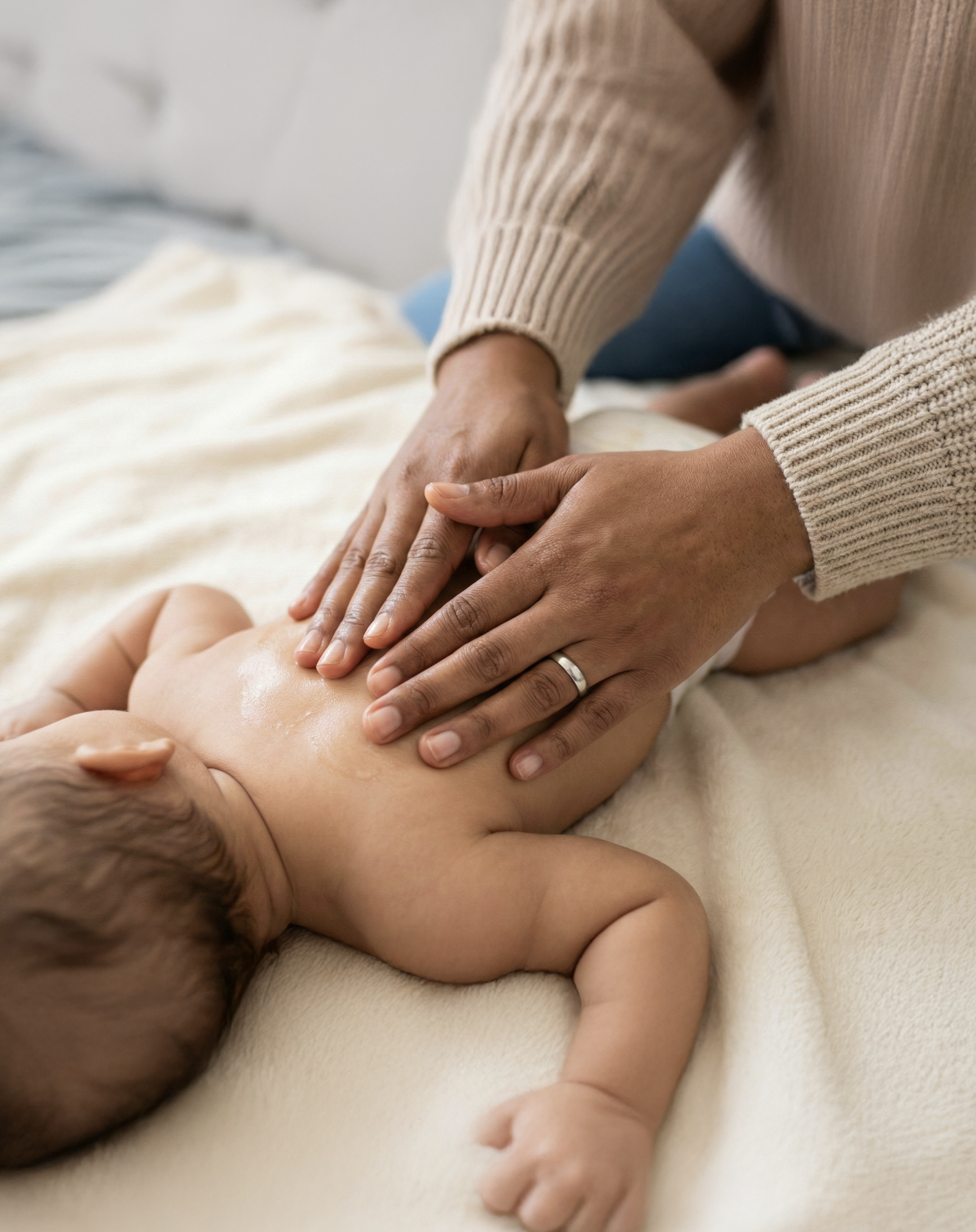
Basic Massage Techniques
Legs and Feet
- "Milking" the leg: Wrap your hands around baby's thigh and stroke down toward the ankle, like you're gently milking
- Roll the leg between your palms
- Thumb circles on the sole of the foot
- Gently squeeze each toe
Tummy
- Paddle strokes: Hands alternate stroking down the belly
- Clockwise circles around the belly button
- "I Love You" technique (described above)
- Knee-to-tummy: Gently push baby's knees toward their belly and hold
Chest
- Heart strokes: Start at the center of the chest, stroke up and out over the shoulders
- Butterfly: Hands criss-cross from hip to opposite shoulder
Arms and Hands
- Same milking stroke as legs
- Roll the arm between your palms
- Thumb circles on the palm
- Gently squeeze each finger
Back
- Long strokes from shoulders to bottom
- Small circles along the spine (not on the spine)
- Gentle raking with fingertips
Reading Your Baby's Cues
The most important part of infant massage isn't technique. It's paying attention to what your baby is telling you.
Signs Baby Is Enjoying It
- Relaxed body and limbs
- Eye contact
- Cooing or happy sounds
- Smiling
- Reaching toward you
Signs to Pause or Stop
- Turning head away
- Arching back
- Crying or fussing
- Stiff or tense body
- Yawning or hiccuping (overstimulation)
If your baby shows discomfort, stop. You can try again later. This isn't about getting through a routine. It's about connection.
Getting Started
You don't need a class to start infant massage, though classes can be wonderful for learning and connecting with other parents.
Start simple:
- Warm some oil in your hands
- Ask permission (say "May I give you a massage?" even though they can't answer)
- Begin with the legs (least sensitive area)
- Watch your baby's response
- Keep it short at first (5 minutes is fine)
- Build from there
The goal isn't perfect technique. The goal is intentional, loving touch while paying attention to your baby.
If you want to learn more or prefer hands-on guidance, we offer infant massage classes that can help you build confidence and learn techniques tailored to your baby's needs.
Your hands are powerful. Use them.

Written by
Desirée Monteilh, OTR/L
Desirée is an occupational therapist, certified infant massage instructor, and Reiki practitioner specializing in maternal wellness. With training in perinatal mental health and doula support, she helps mothers navigate the transformative journey of parenthood.
Learn More About Desirée →