Forget Pinterest: How to Design a Nursery That Actually Helps Your Baby Sleep
September 15, 2025
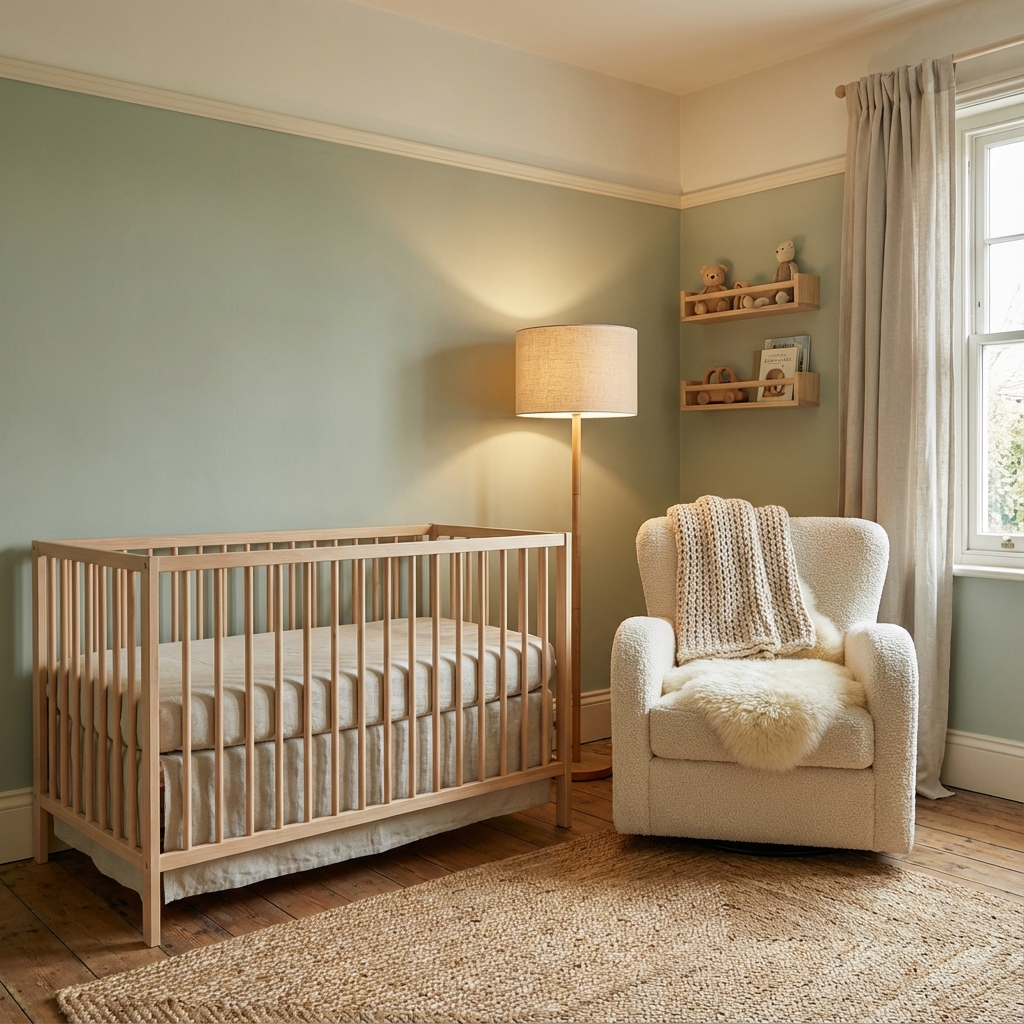
You spent months choosing the perfect shade of sage green. The mobile is handmade. The gallery wall is perfectly curated. And your baby? Won't sleep in there.
Here's the hard truth: that Pinterest-perfect nursery might be part of the problem.
As an occupational therapist, I think about environments differently. I'm not asking "does it photograph well?" I'm asking "does it support sleep, sensory regulation, and development?"
Often, the prettiest nurseries fail on all three counts.
What Babies Actually Need
Babies are sensory beings navigating a world that is completely overwhelming. A good nursery minimizes unnecessary sensory input while providing appropriate comfort and safety cues.
They need:
- Darkness for sleep
- Minimal visual stimulation when it's time to rest
- Consistent background noise that masks sudden sounds
- Appropriate temperature
- Safety
They don't need:
- Colorful murals
- Lots of toys in the crib area
- Bright lights
- Complicated mobiles
- Anything that looks great on Instagram
The Elements of a Sleep-Promoting Nursery
1. Lighting: Go Dark
This is the single most important factor for sleep. Babies (and adults) sleep better in darkness because darkness triggers melatonin production.
Lighting Essentials:
- Blackout curtains or shades: Not "room darkening," true blackout. Test them at midday.
- Cover any light sources: Power strips, monitors, humidifier lights all need to be covered or turned away.
- Red or orange night light: If you need light for night feeds/changes, use red or orange. Blue and white light suppress melatonin.
- Dimmable lighting: For bedtime routines, gradually dim lights to signal sleep is coming.
2. Sound: Consistent White Noise
Babies are used to noise. The womb was loud (about 80-90 decibels, like a vacuum cleaner). Complete silence is actually strange to them.
White noise:
- Masks sudden sounds that cause waking
- Provides a consistent auditory cue for sleep
- Can be used as part of the sleep routine
Tips:
- Place the sound machine across the room (not in the crib)
- Keep volume at 50-65 decibels (you shouldn't have to shout over it)
- Use for naps and nighttime consistently
- Low, consistent sounds work better than music or heartbeat sounds

3. Temperature: Cool Is Better
The ideal room temperature for baby sleep is between 68-72°F (20-22°C). Overheating is both a sleep disruptor and a SIDS risk factor.
- Dress baby in one more layer than you would wear
- Sleep sacks are safer than blankets
- Check baby's chest or back of neck for temperature (hands and feet run cool)
- A fan can help with circulation (and adds white noise)
4. Colors: Neutrals and Soft Tones
Those bright primary colors that are "stimulating for development"? Great for play spaces. Terrible for sleep spaces.
For sleep, choose:
- Soft neutrals: cream, beige, soft gray
- Muted earth tones: sage, dusty rose, soft blue
- Low contrast: avoid stark black and white in the sleep zone
Save the bright, high-contrast stuff for play areas and tummy time mats.
5. Visual Clutter: Less Is More
Stand in your nursery and look around. How much is there to look at?
From the crib, baby should see:
- Mostly ceiling and walls
- Minimal visual interest that could keep them awake
- Nothing dangling that could be a safety hazard
Mobiles are cute, but remove them when baby is sleeping. And once they can sit up, they need to go entirely.
The Crib: Keep It Bare
This is non-negotiable for safety. The crib should contain:
- A firm, flat mattress
- A fitted sheet
- Baby in a sleep sack (optional)
That's it. No:
- Blankets
- Pillows
- Bumpers
- Stuffed animals
- Positioners
I know the styled cribs on Instagram have all these cozy things. They're not safe. Bare is boring, but boring is safe.
Creating Zones
If space allows, create distinct zones:
- Sleep zone: The crib area. Minimal, dark, boring.
- Feeding/comfort zone: A comfortable chair, good lighting for night feeds, essentials within reach.
- Play/development zone: This can be more stimulating. Bright colors, interesting textures, toys.
This helps baby (and you) associate different areas with different activities.
Practical Additions
Things That Actually Help:
- A good rocker or glider: You'll spend hours here.
- A small table next to the chair: For water, snacks, your phone.
- A changing pad with everything within arm's reach: Diapers, wipes, cream, a change of clothes.
- A hamper: For the endless spit-up covered clothes.
- Blackout curtains that actually work.
- A quality sound machine.
What to Skip
- Wipe warmers: Nice idea, but babies adjust to room temperature wipes quickly, and it's one more thing to maintain.
- Elaborate mobiles: Especially ones that light up and play music. Too stimulating for sleep.
- Fancy crib bedding sets: You can't use most of it safely anyway.
- Too many toys in the nursery: Keep them in a play space.
The Bottom Line
A good nursery is designed for your baby's nervous system, not for Instagram.
Dark for sleep. Quiet except for white noise. Cool and safe. Everything else is optional.
You can still make it beautiful. But prioritize function first. Your sleep-deprived future self will thank you.

Written by
Desirée Monteilh, OTR/L
Desirée is an occupational therapist, certified infant massage instructor, and Reiki practitioner specializing in maternal wellness. With training in perinatal mental health and doula support, she helps mothers navigate the transformative journey of parenthood.
Learn More About Desirée →.png)